





Living with less space doesn’t mean living with less comfort.
Across UK homes, living rooms are being asked to do more than ever.
They’re places to relax, entertain, watch films, work from home, play with the kids and occasionally accommodate an extra guest or two. The problem? Traditional furniture doesn’t always keep up. A large, fixed sofa can dictate the entire layout of a room. Heavy armchairs occupy valuable floor space. And once everything is positioned, changing the room around can feel like moving house. For smaller homes, flats and multifunctional rooms, there is another approach: Choose furniture that adapts to the space instead of forcing the space to adapt to the furniture.
From modular sofas and movable loungers to multifunctional seating, here’s how to create a smarter living space without sacrificing comfort or style.

1. Choose flexible furniture for small spaces
One of the most useful principles when furnishing a small living room is simple: Avoid locking yourself into one layout. Traditional three-piece suites are designed around relatively permanent furniture arrangements. Flexible seating gives you considerably more freedom. Individual lounge pieces can be moved depending on what you’re doing.
Hosting friends? Bring seating together. Movie night? Reposition everything towards the television. Need more floor space? Move individual pieces apart or into another room. The room changes because your furniture can change with it. This is particularly useful in apartments, open-plan spaces and family homes where the same room needs to perform several different functions throughout the week.
2. Consider a modular sofa instead of a traditional sofa
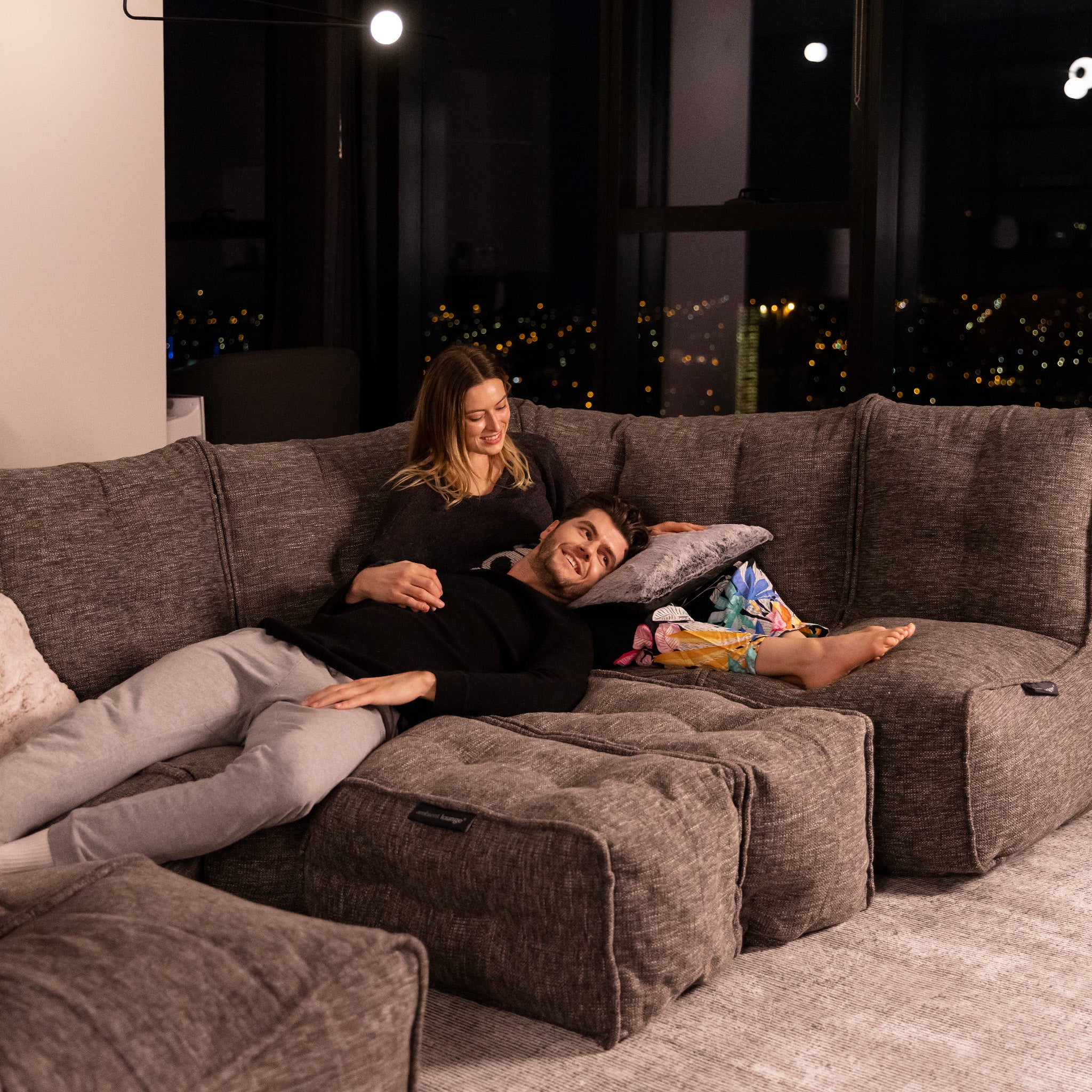
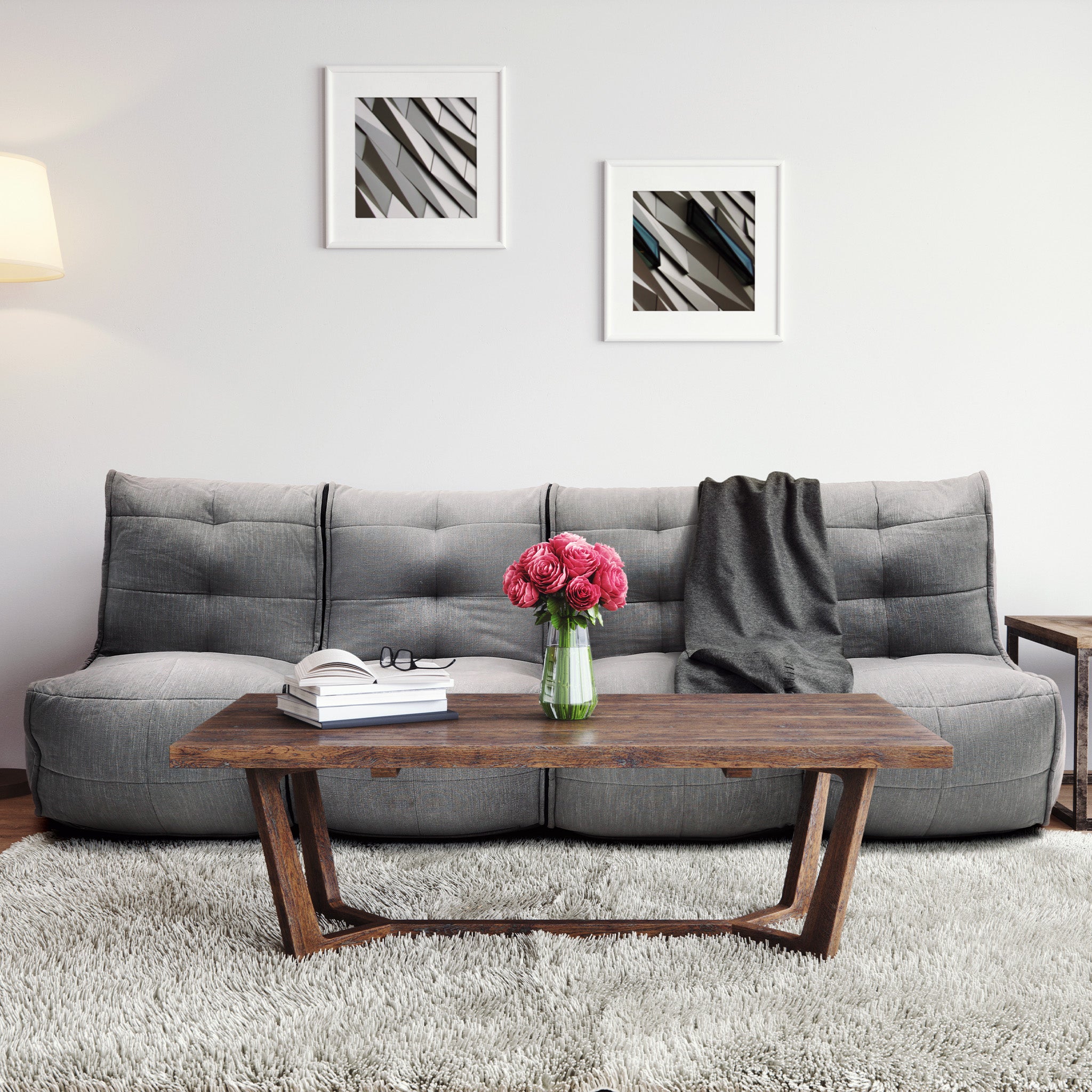
For adaptable living spaces, modular furniture can be one of the smartest investments you make. Rather than purchasing one fixed sofa, modular seating consists of individual pieces that can be arranged in different configurations. You might create a generous corner sofa one day and separate the modules into individual seats the next. Move house? Instead of hoping your existing sofa happens to fit the new living room, your modular configuration can potentially be rearranged around the new space. It’s furniture designed around the reality that our homes—and our lives—change.
Are modular sofas good for small spaces?
They can be particularly useful. The advantage isn’t necessarily that every modular sofa is physically smaller. It’s that you have greater control over how the available space is used. Individual modules can be positioned against walls, brought into corners or separated to create a more open layout. For compact or unusually shaped living rooms, that flexibility can be far more practical than trying to squeeze in a conventional fixed sofa. Ambient Lounge’s modular seating takes this idea further with lightweight, soft furniture that can be repositioned without the effort associated with moving a traditional sofa.

3. Stop pushing everything against the walls
It sounds logical: small room = furniture against every wall. But it doesn’t always produce the best layout. Leaving some breathing room around furniture can actually make a living room feel more considered and less crowded. Instead of automatically creating a perimeter of furniture, identify the room’s focal point.
That could be:
• A television or media wall
• A fireplace
• A window or view
• A coffee table
• A central conversation area
Then position your seating around how you actually use the room. Flexible loungers and modular seating make this considerably easier because you’re not permanently committed to one arrangement.
4. Choose furniture that visually takes up less space
There’s a difference between physical space and visual space. Two pieces of furniture can have similar dimensions but make a room feel completely different. Large rigid sofas with substantial frames, oversized arms and high backs can dominate a small room. Softer silhouettes and lower profiles can create a more relaxed sense of openness.
The Ambient Lounge Butterfly Sofa, for example, provides the comfort of a generous lounge chair without the visual weight of a conventional armchair. Its sculptural shape creates a defined seating position while maintaining the relaxed aesthetic that works particularly well in contemporary spaces. Use one as a statement chair or combine multiple pieces when you need additional seating.
5. Create furniture zones in an open-plan space
Open-plan living can provide more physical space—but it introduces another problem: How do you define different areas without building walls? Furniture can do the job. Use seating arrangements to subtly separate:
Living
Create a central arrangement around a coffee table or media area.
Dining
Keep a clear visual pathway between the lounge and dining table.
Working
Position a desk or compact workspace slightly outside the main relaxation zone.
Reading
A single lounge chair, lamp and side table can turn an unused corner into a dedicated reading area.
Modular seating is particularly effective here because arrangements can change as the purpose of the space changes. You don’t necessarily need more rooms. Sometimes you simply need the room you have to work harder.
6. Use corners properly
Corners are frequently some of the most underused areas in a living room. They’re also perfect for flexible seating. Instead of filling a corner with a bulky cabinet or leaving it empty, consider creating a dedicated lounge zone with a compact chair or lounger. The Avatar Lounger and Satellite Twin Sofa can work particularly well where relaxed seating is wanted without introducing another conventional sofa. Add a small side table and floor lamp and an otherwise unused corner becomes somewhere to read, scroll, listen to music or disappear with a coffee for half an hour.
7. Make your living room multifunctional
A practical living room shouldn’t have one purpose. Particularly in smaller homes, every square metre needs to earn its place. The living room might become: A lounge in the evening. A playroom on Saturday morning. A home cinema on Saturday night. A social space when friends arrive. A quiet reading room on Sunday.
The easiest way to accommodate those different uses is to avoid filling every available centimetre with heavy, fixed furniture. Movable seating gives you options. And options are one of the most valuable things you can have when space is limited.

8. Think about how easily furniture can actually move
“Flexible furniture” sounds great until moving it requires two people, a screwdriver and twenty minutes. For furniture to genuinely support flexible living, it needs to be practical to reposition. This is where lightweight lounge furniture offers an advantage over conventional framed sofas. Move a chair towards the television. Turn two loungers towards each other when friends arrive. Pull seating towards the centre of the room for games night. Move it aside when the kids need the floor. Then put everything back.
A living room doesn’t need to look exactly the same every day.
9. Build a modular layout that can grow with you
One of the less obvious benefits of modular furniture is the ability to think beyond the room you have today. Start with the configuration your current space can comfortably accommodate. If your space becomes larger later, the seating arrangement can potentially expand with it. Likewise, if you move somewhere smaller, individual modules can be separated and used in different rooms.
A module that forms part of your main sofa today could become an individual lounge seat tomorrow. That’s a very different way of thinking about furniture. Instead of buying something specifically for one room, you’re investing in pieces that can evolve with different spaces.

10. Don’t sacrifice comfort just to save space
There is a temptation when furnishing a small home to make everything smaller. Smaller sofa. Smaller chair. Smaller table. Eventually, you end up with a perfectly efficient room nobody particularly wants to sit in. Space-saving should be about using space intelligently, not simply shrinking everything. Sometimes one exceptionally comfortable lounge chair is more useful than two rigid occasional chairs.
A well-planned modular sofa may work better than a compact conventional sofa plus separate armchairs. And furniture that can be moved between rooms can eliminate the need to duplicate pieces entirely. The objective isn’t to fit as much furniture as possible into the room. It’s to get more from the furniture you choose.
11. Use fewer, better pieces
Small-space living benefits from restraint. Before adding another piece of furniture, ask: What does this add to the room? The most successful smaller interiors often contain fewer pieces, but each has a clear purpose.
Choose a comfortable primary seating arrangement. Add flexible occasional seating where necessary. Keep pathways open. Allow negative space around key pieces. Then stop. A room doesn’t need furniture against every available wall to feel complete.

12. Choose furniture that works in more than one room
This is where flexible furniture becomes particularly valuable. A lounge chair doesn’t necessarily belong exclusively in the lounge. Move it into a bedroom when guests need more seating. Use it in the conservatory during summer. Create a temporary gaming chair. Move it towards the television for film night. Take suitable indoor/outdoor pieces onto the terrace when the weather behaves.
The more situations a piece of furniture can accommodate, the more useful it becomes—particularly when storage and floor space are limited. Small-space living isn’t about compromising. It’s about flexibility. The smartest homes aren’t necessarily the biggest. They’re the ones where the available space works exceptionally hard. Instead of designing a room around heavy, permanent furniture, consider furniture that allows the room to evolve.
Move it. Separate it. Reconfigure it. Bring it together again.
That’s particularly important as our living rooms become more multifunctional. Ambient Lounge furniture is designed around a different philosophy from conventional rigid furniture: relaxed forms, lightweight construction, modular possibilities and pieces that can adapt to the way a space is actually being used.
So your living room isn’t permanently committed to one layout. And neither are you.
Explore flexible seating for smarter living at Ambient Lounge →